
Why a GPS Tracking Device is a Game-Changer for Urban Safety?
The first-ever GPS tracking device was introduced in the early 1970s for satellite launches and military operations, but with the evolution of smartphones and tracking devices, it started to become handy for civilians as well.
It is a satellite-based technology that allows users to track real-time locations for safety purposes. The commercialization of GPS tracking devices made them easily accessible to users’ everyday safety-related concerns. These tracking devices give you the leverage of smart connectivity and SOS alerts to respond as soon as possible during emergency scenarios. If you are still wondering why these devices are a game-changer for urban safety, consider this blog your guide to it.
What is a GPS Tracking Device and How Does It Work?
GPS tracking devices are portable gadgets used for tracking locations with precision; previously, they were widely used in cars and vehicle tracking.
How do GPS trackers work?
The GPS trackers work on the GPS data and feed it to tablets, smartphones and computers. The core reason for their tracking precision is that these devices are connected to a network of satellites for enhanced location tracking.
Prior to using the devices, it is important that they work on a process known as ‘trilateration,’ which involves three or more satellites from GNSS networks. These satellites provide vital information such as time, latitude, longitude and elevation. All of this information gets aggregated and analyzed for real-time global positioning.
How GPS Tracking Devices Improve Personal Safety?
The everyday use case of GPS is proven to be life-saving time and time again with features like motion sensors and fall detection along with CPR that triggers automatic alerts in case the user falls. Other than that, these tracking devices have real-time tracking for continuously checking on your loved ones with the option for SOS emergency alerts, which helps the responder to reach the exact location of the mishap. These devices have been a lifesaver when it comes to finding someone who is lost; users get the option for geofencing, which functions as a safe zone. The purpose of geofencing is to create a virtual boundary, which triggers an alarm if someone goes beyond it.
Related Blog: GPS Tracker for Phone vs. Anti-Snatch Tech: Which Actually Stops Theft?
Key Benefits of Using a GPS Tracking Device in Urban Areas
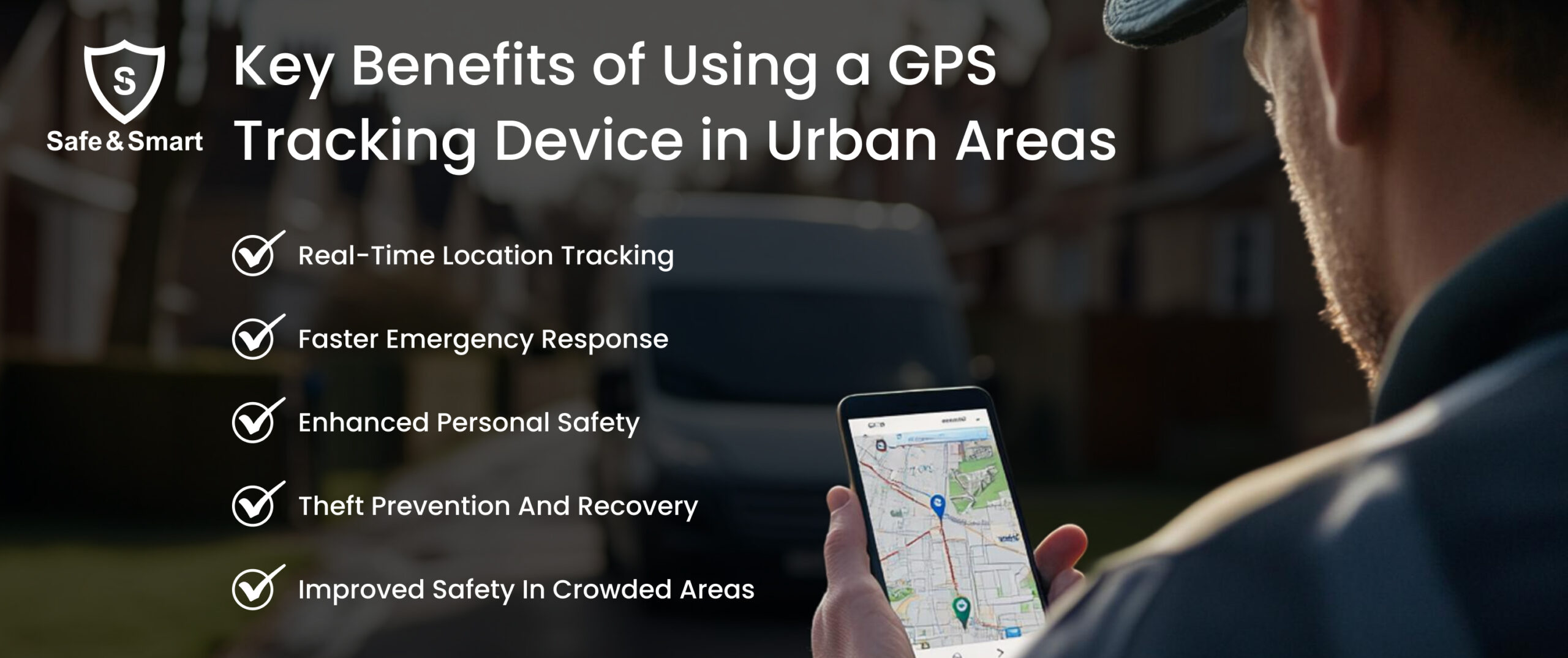
Following on to the safety features, the next step is to understand the key benefits of using GPS trackers in urban areas, which are as follows.
Real-Time Location Tracking
One of the most crucial features of the personal GPS tracking device is that it gives users seamless access to real-time location information with enhanced accuracy. It allows users to track their loved ones in real time, which is life-saving in the event of any emergency.
Faster Emergency Response
With real-time location tracking, users can reach out to the exact location for faster emergency response, which could be the difference between life and death. The alarm triggers in the event of a mishap, notifying you in real time.
Enhanced Personal Safety
Enhanced personal safety is one of the most significant benefits of GPS-enabled tracking devices. This is particularly useful for female solo travelers, as they can share their real-time location with a trusted person, eliminating any concerns about safety.
Theft Prevention and Recovery
In case of theft, an alarm gets triggered when someone tries to snatch your phone so that you get notified about the action. This also increases the chances of successful theft recovery, as you will have the real-time location of your stolen goods.
Improved Safety in Crowded Areas
Lastly, these sorts of products are so effective in the crowd where snatching and pickpocketing are very common. These sorts of devices come with a string attached to the device’s cover, which triggers an alarm in case someone tries to grab your phone without letting you know.
Types of GPS Tracking Devices for Everyday Use
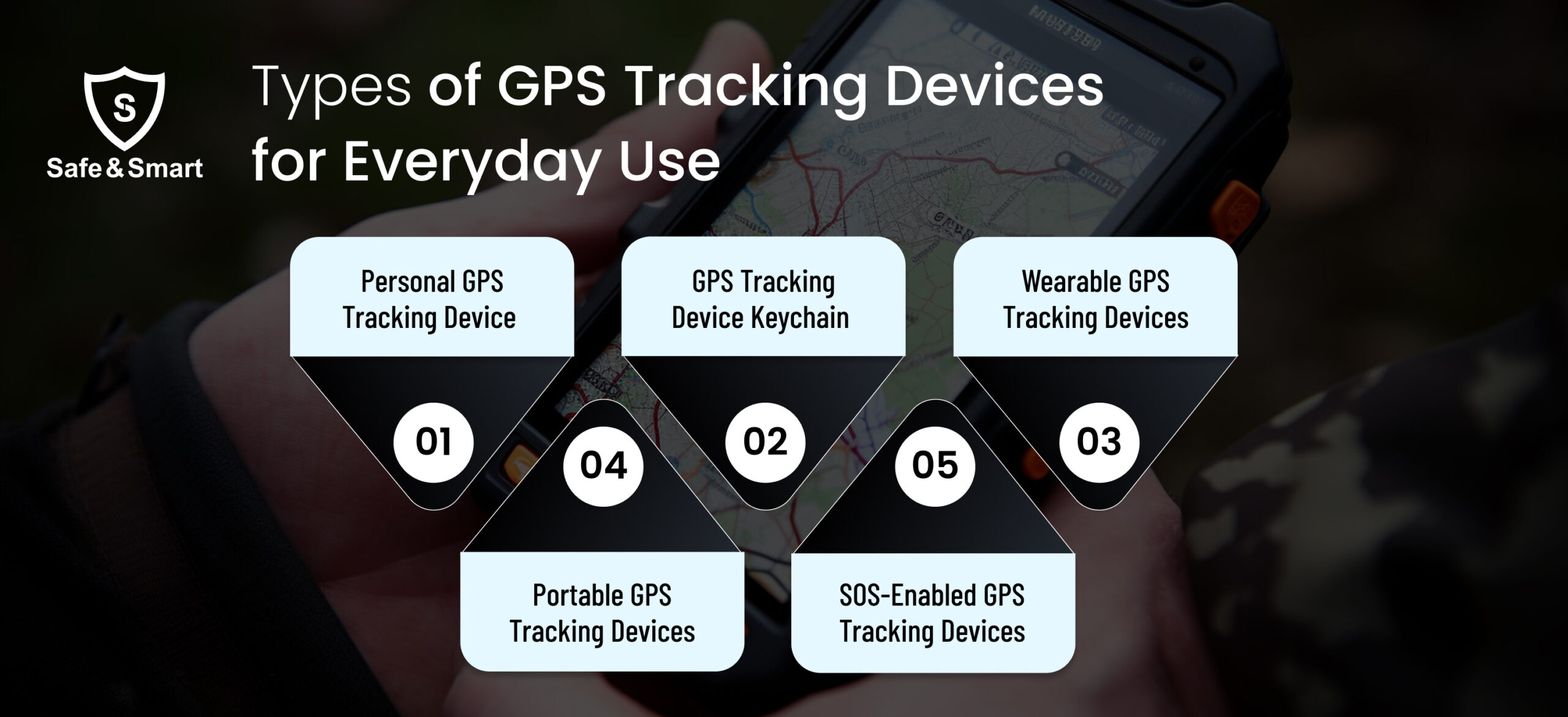
The next thing is to understand the various types of GPS trackers, which will give you the much-needed understanding of which device is suitable for your day-to-day life.
Personal GPS Tracking Device
This is the most straightforward option: a small device that tracks someone’s location and sends it to your phone. It runs on cellular networks, so as long as there’s a signal, you can see where someone is there in real time. Most of them let you set up zone alerts, so you get notified when someone leaves or enters a specific area.
GPS Tracking Device Keychain
A tiny tracker that hangs off your keys or clips onto a bag. People like these because you’re already carrying your keys everywhere, so it doesn’t add anything to your routine. The battery of a GPS tracking device keychain tends to last longer since it is not doing much heavy lifting. Some have a basic SOS button too, which is a nice extra for something so small.
Wearable GPS Tracking Devices
These come as watches or wristbands, mostly used for kids and older adults. The appeal is that they stay on the person rather than sitting in a bag that could get left behind. A lot of them also track steps or heart rate, so they double as a basic health monitor. In some cases a child is actually wearing rather than carrying.
Portable GPS Tracking Devices
These are the flexible ones. Toss one in your luggage, leave one in your car, or put it in a backpack; it doesn’t matter. There’s no fixed purpose for them, which is partly why they’re so popular. Travelers use them a lot. They charge like a regular device and most are small enough that you won’t even notice them.
SOS-Enabled GPS Tracking Devices
These have one job beyond tracking a button you press when something goes wrong. Hit it, and your location immediately goes to whoever you’ve set up as an emergency contact, or directly to a response service. If you’re someone who spends time in remote areas or works alone at odd hours, this feature matters more than almost anything else on the spec sheet.
GPS Tracking Device vs Smartphone Tracking: What’s Better?
Your phone can share your location, but it also runs out of battery, gets stolen, or just gets turned off. A dedicated tracker doesn’t have those problems. It’s not trying to do fifteen other things; it’s just tracking. Battery life is considerably better, and some models work without a data connection entirely. If someone’s safety is genuinely on the line, relying on a phone feels like a gamble. A proper tracker is far more dependable for that specific job, and for reliable, feature-rich options, you can explore the Smart Care products from Safe&SmartOne.
Who Should Use a GPS Tracking Device?
Even though the use of these devices is subjective, few people support them, yet they are essential. These are the people who should treat this sort of device as an everyday essential.
Women Traveling or Walking Alone
Knowing someone can see your location when you’re out late on your own is genuinely reassuring. It’s not about being watched; it’s about having a backup if something goes sideways.
Students Living Away from Home
A tracker gives parents a way to check in without calling every hour, which honestly works better for everyone, specifically when you are a student living far from your home.
Elderly Individuals
For seniors dealing with memory issues or limited mobility, a wearable tracker is less about surveillance and more about being able to get help fast if they need it. These are lifesavers
Daily Commuters
Long commutes, especially late ones, are easier when someone at home knows your route and can tell if something’s off.
Travelers and Tourists
Being somewhere unfamiliar always carries a bit of risk. A tracker is a smart choice in an unfamiliar country.
Night Shift Workers
Working alone at night, in a warehouse or on a route or anywhere you are isolated, is when you most want a way to call for help that doesn’t depend on getting a phone signal or finding someone nearby.
Final Thoughts
To sum this up, GPS tracking devices have been on the market for a while. These sorts of devices are proven to be a boon for expats traveling in the country as well as for locals who are concerned about their devices or personal safety. When it comes to safety, you need devices that are precise and effective; for that, you need a tracking solution like Safe&SmartOne, which works perfectly every time you track something. These devices offer the ideal blend of luxury and advanced functionality to ensure the safety and well-being of your loved ones. These tracking devices have become everyday gadgets that you carry every day just like your smartphones but the difference is the reliability and precision they give you during tracking.
Frequently Asked Questions
1.Can a personal GPS tracking device send alerts automatically?
Yes, many devices can send you notifications, SMS, or emails in real time when someone breaks a geofence, the battery runs low, or the device moves suddenly.
2.How long does the battery last in a GPS tracking device?
With power-saving modes, battery life can last from 1 to 3 days for frequent real-time tracking and up to 30 days or more.
3.Are GPS tracking devices suitable for everyday carry?
Yes, small models like keychains or wearable trackers are made to fit in bags, on keys, or for personal use. They are small and sturdy.
4.Can GPS tracking devices be used without a smartphone?
Most need a smartphone or web app to set up and keep an eye on them, but some stand-alone models can send SMS alerts.